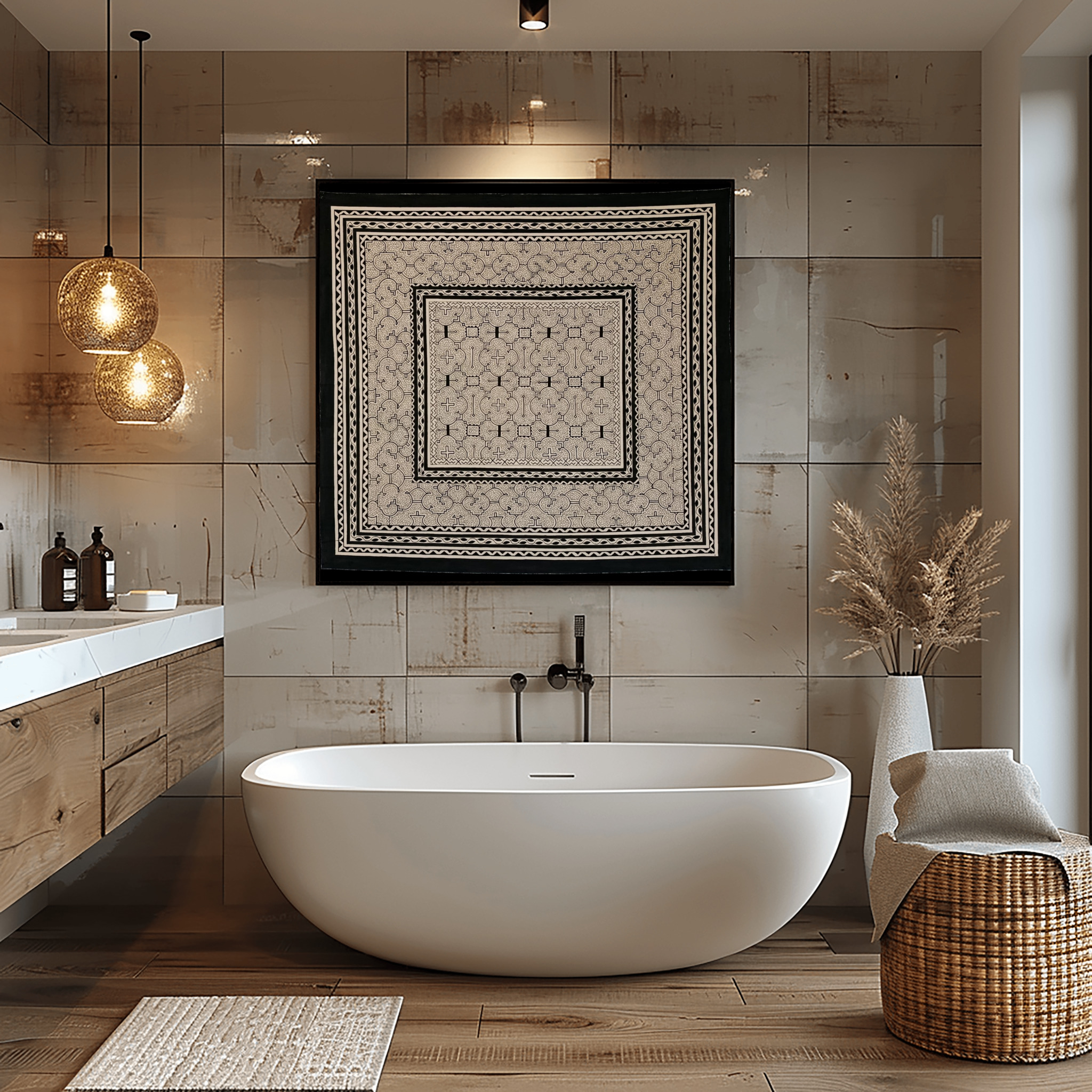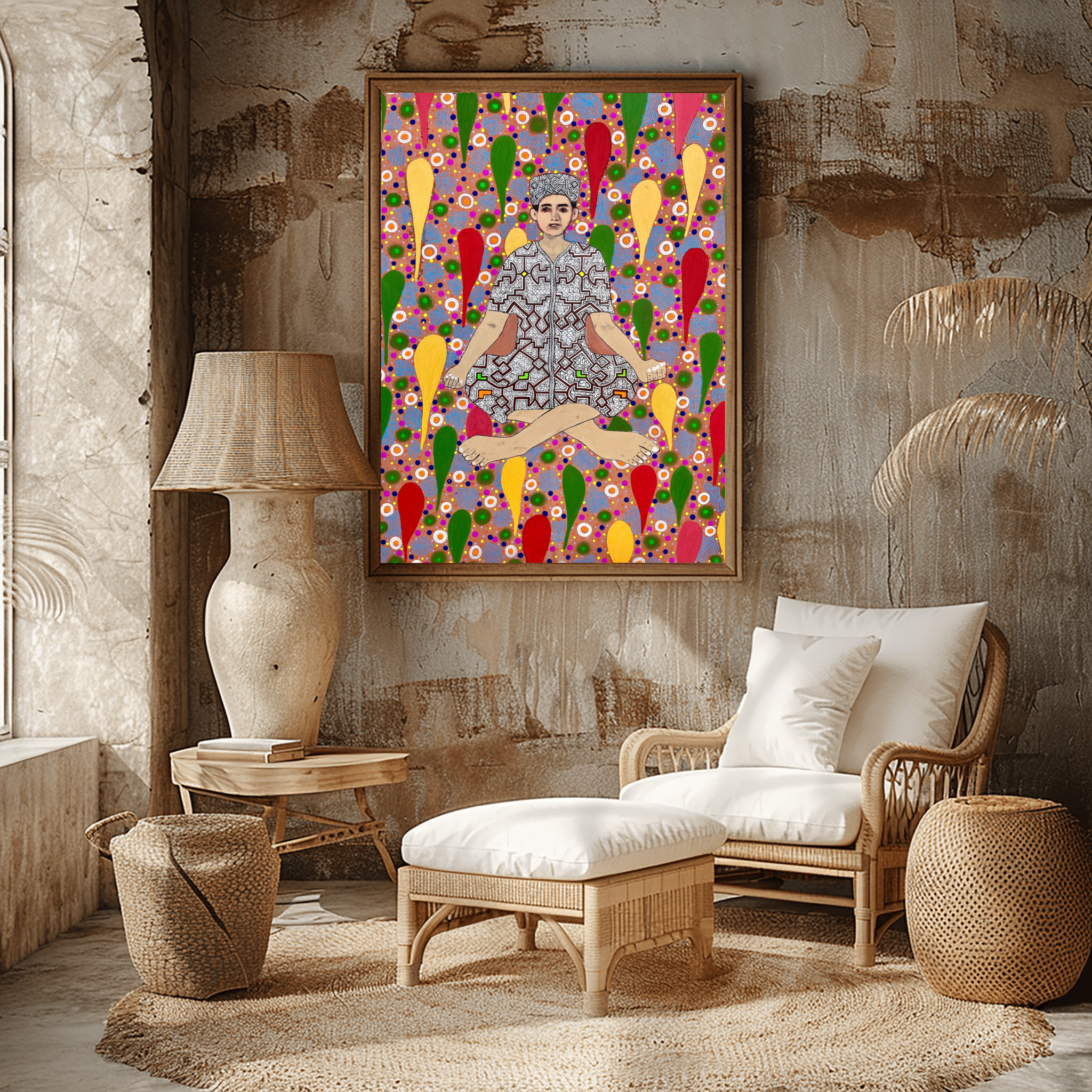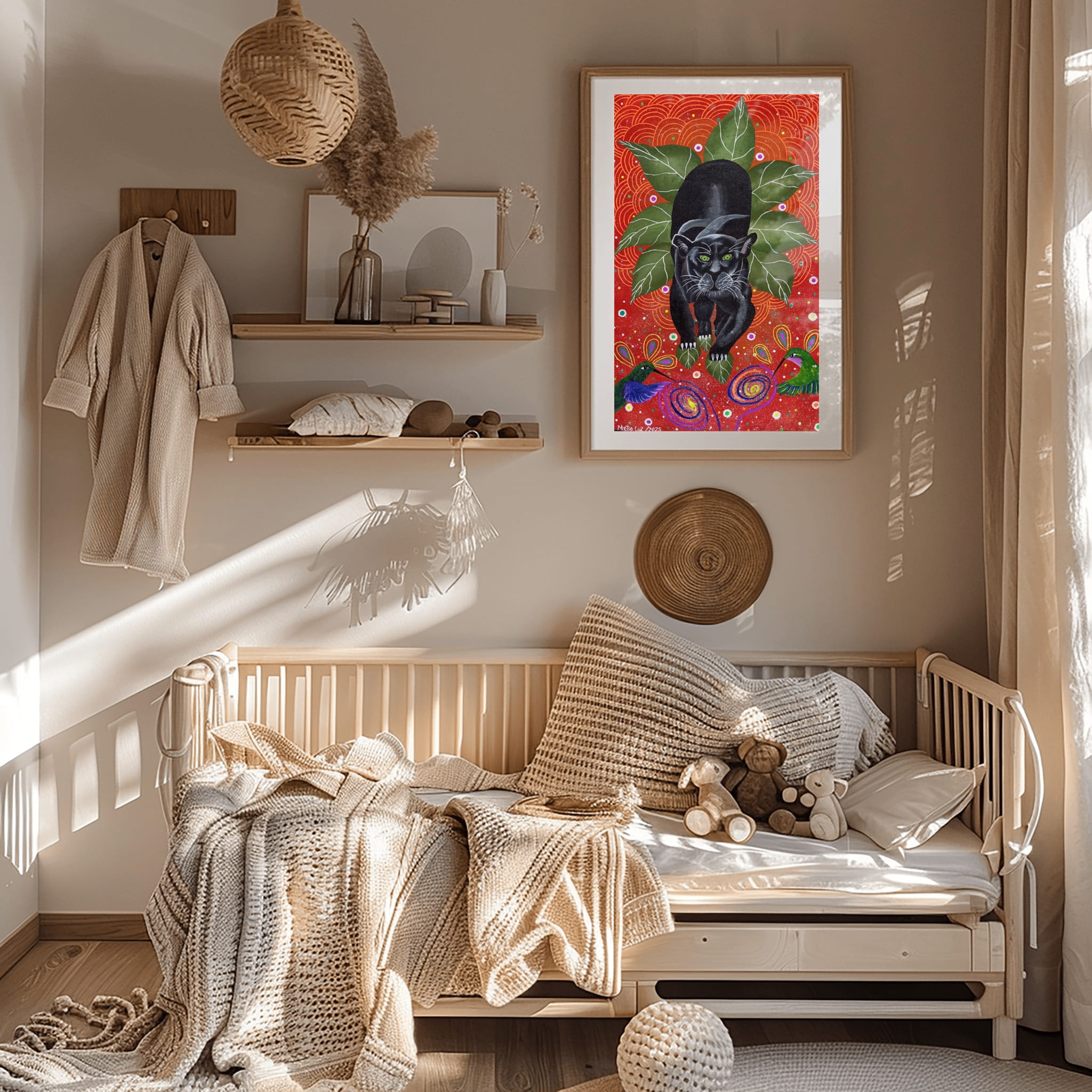
Why the Artist Matters
In the contemporary art world, provenance is everything. A Basquiat without documentation is worth a fraction of a Basquiat with full attribution. The same logic applies — with even greater force — to indigenous Amazonic art, where the artist's ceremonial training, community lineage, and cultural authority are not just biographical details. They are part of the work itself.
When you collect a kene painting without knowing who made it, you are collecting a surface. When you know the artist — her name, her community, the tradition she inherited — you are collecting a story that extends centuries in both directions. The pattern on the canvas connects to the grandmother who taught her, and to the grandmother's grandmother before that, back to origins that have never been written down but have never been interrupted.
This is what makes indigenous Amazonic art different from craft tourism. It is why provenance matters, and why fair trade matters, and why "anonymous Amazonian artisan" on a gallery tag is a red flag rather than a charming mystery.
Our Artists — A Living Network
The artists in the Amazonic Art collection span several traditions and regions of the Amazon basin — Shipibo-Konibo kene weavers from the Ucayali River in Peru, visionary painters trained in ceremony-based traditions of the Peruvian Amazon, and artists from the broader Amazonic region whose work carries related but distinct ceremonial and visual vocabularies.
What unites them is not geography but practice: all of the artists we work with are active participants in the traditions they represent. Kene artists are embedded in living Shipibo-Konibo ceremonial culture. Visionary painters work within active healing lineages. Their art is not a record of a past tradition — it is the tradition, continuing.
We work directly with each artist and maintain personal relationships with the communities we source from. This is how we can speak with confidence about provenance, fair compensation, and the ceremonial integrity of the work.
Want to know more about a specific artist?
We hold complete information about every artist in our collection — their full name, community, training, ceremonial lineage, and artistic background. We share all of this directly with collectors who inquire about a specific work, but we choose not to publish artist profiles publicly in order to protect their privacy and the integrity of their communities. If you are interested in a specific work — or want to know the story behind the person who made it — reach out directly. We're always happy to share.
CONTACT US WHATSAPPWhat Fair Trade Means in Practice
"Fair trade" is a meaningful term only when it is specific. Here is what it means in our relationships with artists:
- Transparent pricing: The artist knows exactly what the gallery charges for their work, and their compensation is agreed in advance. There are no surprise deductions.
- No consignment traps: We do not hold art on consignment indefinitely. Artists are compensated when their work is acquired by the gallery, not after it sells — eliminating the risk that artists carry their own work unsold for months or years.
- Cultural credit: Every piece in our collection is sold under the artist's name. We actively resist the market tendency to erase individual attribution in favour of generic "indigenous art" branding.
- No "folk art" anonymity: We refuse to sell work without full artist attribution. If a piece cannot be attributed to a named individual, it is not part of our collection.
These are not difficult standards — they are the basic requirements of an ethical gallery relationship. We mention them because they are not universal, and collectors deserve to know what to look for when purchasing anywhere.
Chain of Custody — Studio to Your Wall
Every piece in the Amazonic Art collection moves through the following steps:
- Creation: The artist completes the work in their studio or community space.
- Documentation: We photograph the work, record the artist's name and community, and document materials, dimensions, and date.
- Acquisition: The gallery acquires the work directly from the artist at an agreed price.
- Certificate of Authenticity: A certificate is prepared identifying the artist, community, materials, dimensions, and cultural context.
- Listing: The work appears in our gallery with full attribution and the certificate available to the buyer.
- Delivery: Professional packing, tracked international shipping from Costa Rica, and the certificate in the package.
This chain is why the prices in our collection reflect the true cost of authentic, attributed, fair-trade indigenous art — and why pieces that appear elsewhere for a fraction of the price should be examined carefully.
Commissioning a Work
For collectors who want something specific — a particular tradition, scale, palette, or ceremonial theme — we offer commissions. The process begins with a conversation to understand your vision. We then match you with the most appropriate artist in our network, agree on a brief, and confirm timeline and price.
Commission timelines range from 4 to 12 weeks depending on the scale and complexity of the work. We maintain communication throughout and send progress photographs at key stages.
To discuss a commission, visit our contact page or message us directly on WhatsApp at +506 8308-7148.
To learn more about the traditions behind the art, read our collector's guides: What is Shipibo Kene Art? and A Collector's Guide to Ayahuasca Art.