Paintings That Hum
The first thing most collectors notice about an authentic ayahuasca painting is that it seems to vibrate. Not metaphorically — there is a literal visual hum produced by the interaction of dense, contrasting colours and the micro-layering of forms that characterises the best work in this tradition. Serpents coil within serpents. Figures emerge from and dissolve into foliage. Every inch of the surface is alive.
This quality is not an artistic effect added for impact. It is an honest representation of what ceremonial experience actually looks like. An ayahuasca painting is not inspired by ceremony — it is a transcription of one.
What Is Ayahuasca Art?
Ayahuasca art is a category of visionary painting created by indigenous and mestizo artists trained in Amazonian plant medicine traditions. The artists are almost always curanderos (healers) or their close apprentices — people who have experienced what they are painting, often hundreds of times over decades of ceremonial practice.
The word "ayahuasca" comes from the Quechua aya (spirit, ancestor) and waska (vine, rope) — "the vine of the souls." The brew, made primarily from the Banisteriopsis caapi vine and chacruna leaves, has been used for healing and divination in Amazonian communities for centuries. The art that has emerged from this tradition is not decorative — it is documentary.
What separates ayahuasca art from broader psychedelic art is this: the artist is not depicting a personal drug experience. They are documenting an encounter with specific spirits, plants, and cosmic forces within a framework of accumulated traditional knowledge. Every element in an authentic piece has a meaning within that framework.
A Brief History — From Pucallpa to the World
The modern tradition of ayahuasca painting is often traced to Pablo Amaringo (1943–2009), a Peruvian healer and painter from Pucallpa who co-founded the Usko-Ayar School of Amazonian Painting in 1988. Amaringo's paintings — first documented in the book Ayahuasca Visions with anthropologist Luis Eduardo Luna — introduced the world to a sophisticated visual vocabulary drawn entirely from ceremony.
The Usko-Ayar school trained generations of painters who have spread this tradition globally. Today, Peruvian ayahuasca art is collected internationally, held in private collections and shown in galleries from New York to Amsterdam. Meanwhile, the tradition continues to develop in the Amazon, with new artists integrating contemporary materials while maintaining the ceremonial foundation.
Key Visual Characteristics
Once you know the vocabulary, ayahuasca paintings are immediately recognisable:
- The anaconda / serpent: The sachamama (mother of the forest) appears in nearly every major work. Serpents represent the ayahuasca vine itself, the energy of healing, and the pathways through which spirit beings travel.
- Bioluminescent palette: Yellows, greens, blues, and violets at high intensity, often appearing to glow from within. This quality reflects the actual visual experience of ceremony, where plants and spirits appear to generate their own light.
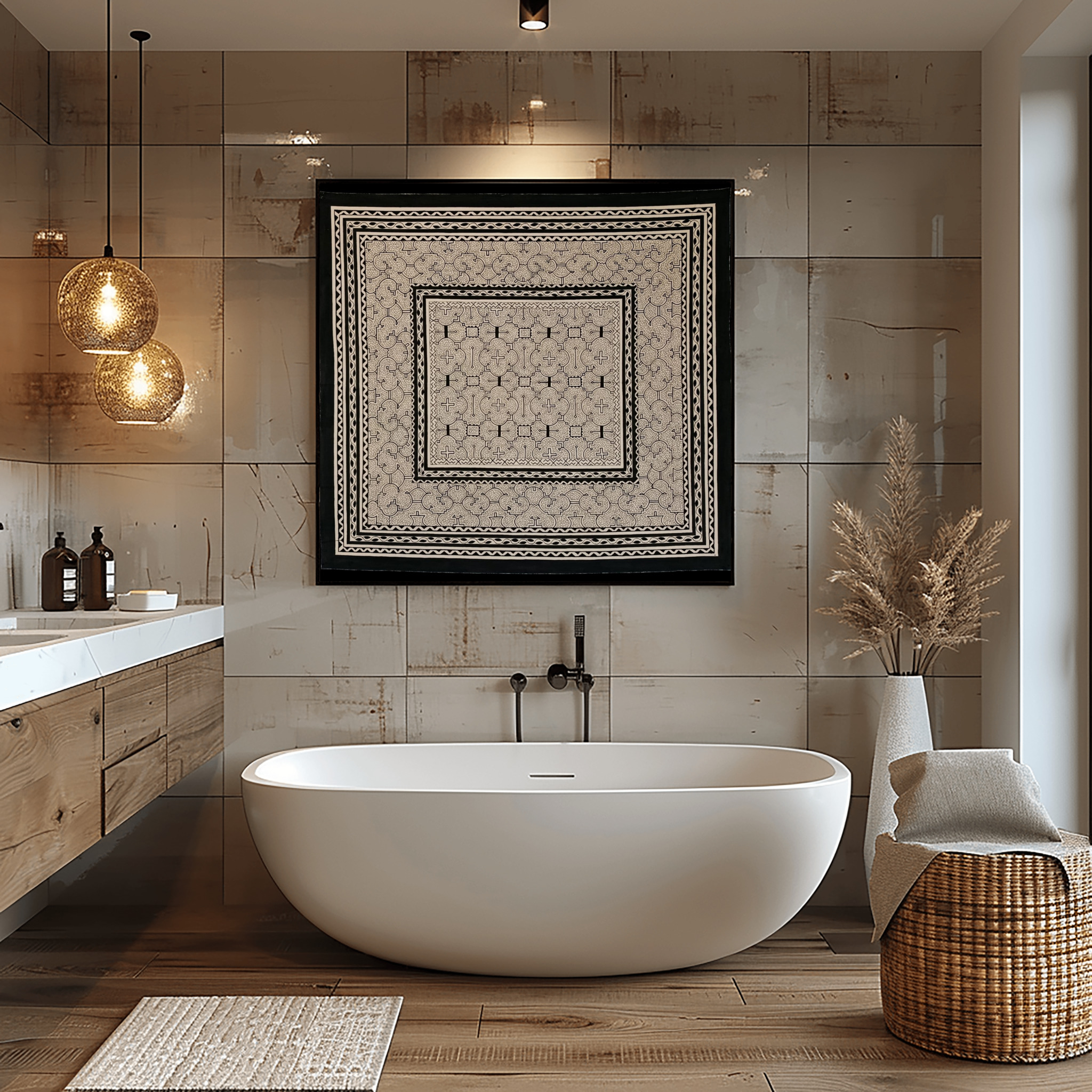
- Geometric underlays: Many works feature a geometric substrate — related to but distinct from Shipibo kene — that structures the overall composition. These grids often become visible only as the eye adjusts to the density of the painting.
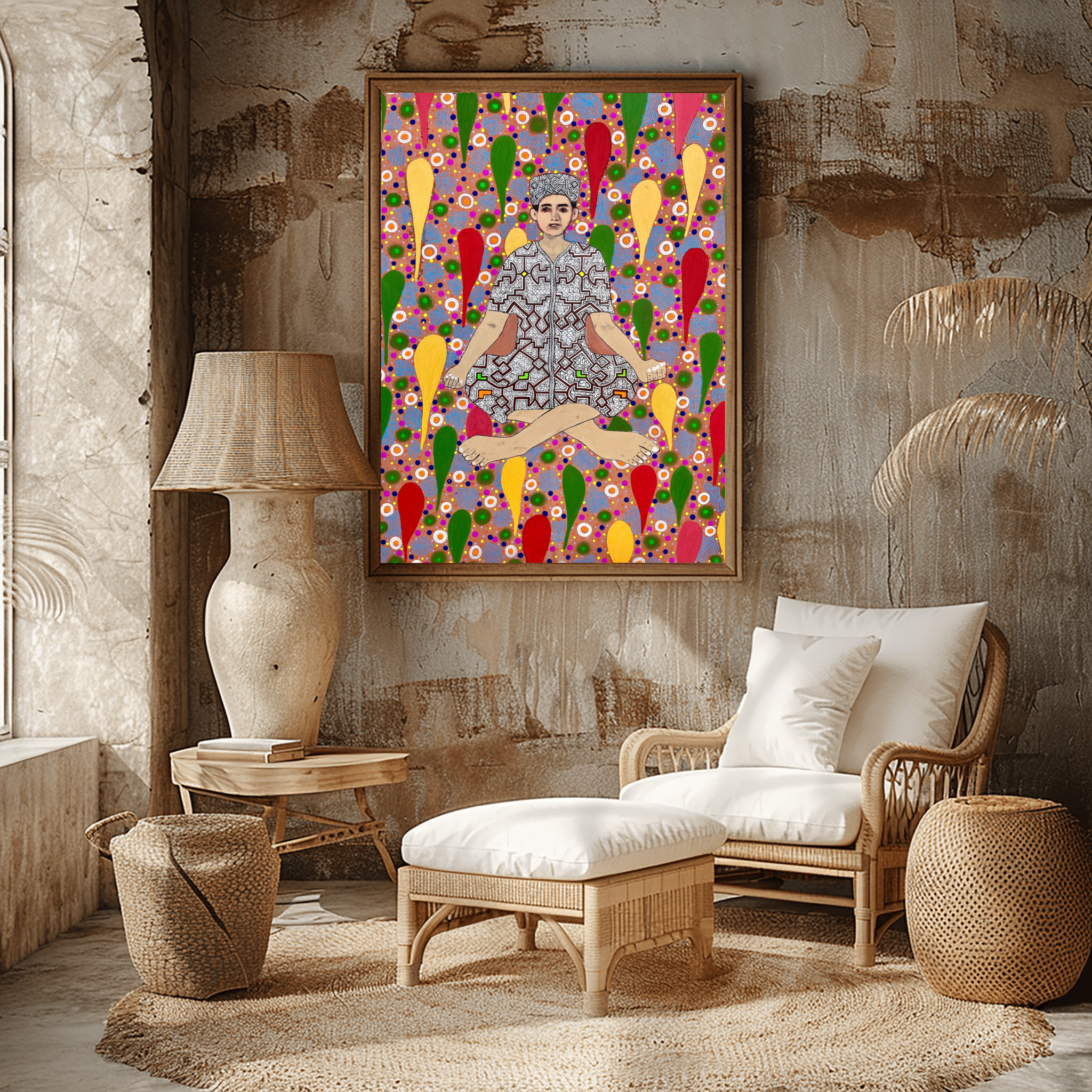
- Spirit beings: Humanoid and hybrid forms — doctors, ancestors, plant spirits, extraterrestrial presences — populate the foreground and background. Their placement encodes narrative information about the ceremony depicted.
- Bilateral symmetry: Many compositions have a vertical axis of symmetry, reflecting the ordered nature of the ceremonial world encountered under careful traditional guidance.
The Jaguar — Master of the Spirit World
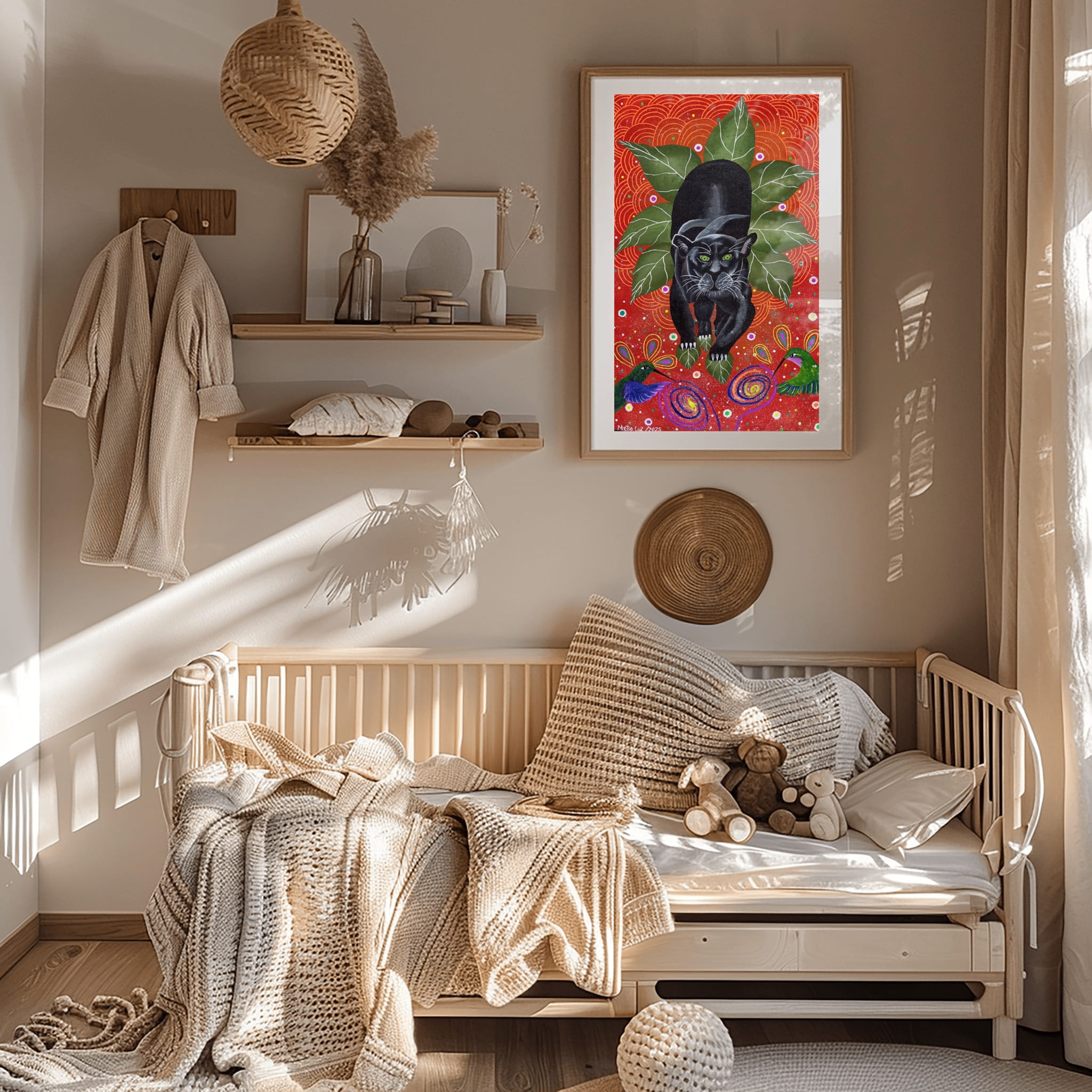
Among all the figures in ayahuasca art, the jaguar (otorongo) holds a special place. It is the most powerful healing spirit in Amazonian cosmology — the master of the space between worlds, capable of both causing and curing illness. Healers who work with the jaguar spirit are considered among the most powerful in their tradition.
When a jaguar appears in a painting, it signals the presence of deep ceremonial power. You will often find it coiled within the anaconda, perched above the ceremony space, or transforming between human and animal form. Its spots may be painted as small geometric designs — an echo of kene, suggesting the visual connection between these two great Amazonian art traditions.
For a broader look at the visionary tradition that encompasses jaguar imagery and other Amazonic iconography, see our visionary art collection.
What Distinguishes Authentic Work
The international demand for ayahuasca art has created a market for imitation. Here is what to verify before purchasing:
- Artist biography: Authentic work is attributed to a named painter with a documented connection to the ceremonial tradition — not to "Amazonian artists" generically.
- Style coherence: Within a single work, the visual logic should be consistent. Imitations often mix motifs from multiple traditions without understanding their meaning, producing compositions that look similar but feel incoherent on close examination.
- Provenance: A clear chain of custody — artist, community, gallery, buyer — protects both the collector and the tradition.
- Certificates: Reputable galleries provide certificates of authenticity identifying the artist, materials, creation date, and often a brief statement of the ceremonial context of the work.
SHOP AYAHUASCA PAINTINGS
Original ayahuasca paintings from $550
All originals include a certificate of authenticity and artist biography. Fair trade certified. Ships worldwide from Costa Rica.
VIEW AYAHUASCA VISIONARY ART COLLECTIONVisionary Art vs. Ayahuasca Art — What's the Difference?
These terms are often used interchangeably, but there is a useful distinction. "Visionary art" is the broader category — it encompasses any art that depicts inner, transcendent, or spiritual experience, regardless of the tradition behind it. The term includes artists like Alex Grey and Ernst Fuchs alongside Amazonian ceremonial painters.
"Ayahuasca art" is more specific: it refers to work created by practitioners within the Amazonian plant medicine tradition, depicting specifically what is encountered in ayahuasca ceremony. All ayahuasca art is visionary art, but not all visionary art is ayahuasca art.
At Amazonic Art, our collection focuses on the Amazonian ceremonial tradition — works with a documented connection to indigenous or mestizo healing practice. The difference matters for the collector because it affects authenticity, provenance, and the cultural weight of the work.
How to Care for an Original Painting
Original Amazonic paintings on canvas are durable if handled correctly:
- UV protection: Hang away from direct sunlight. UV rays will fade organic pigments over time, regardless of medium. UV-filtering glass in frames is a worthwhile investment for high-value pieces.
- Humidity: Avoid hanging on exterior walls or in bathrooms. Canvas is sensitive to humidity fluctuations — aim for a stable 40–55% RH.
- Canvas care: Do not touch the painted surface. If dust accumulates, use a very soft, dry brush across the surface in gentle strokes. Do not use water, solvents, or cleaning products.
- Hanging: Use proper D-ring hardware and hang from two points to prevent tilting. For large works, a French cleat system distributes weight more evenly than wire hanging.
Starting a Collection — Budget and Approach
Collecting ayahuasca art does not require a gallery budget. Original paintings in the collection begin at $550, and canvas prints from $280 — making this tradition accessible to a wide range of collectors.
A practical starting approach: begin with a print to understand how the work lives in your space. Then acquire one original that speaks most directly to you. Avoid buying multiple pieces simultaneously — each ayahuasca painting commands its own space and attention. This is not wall decoration; it is a presence.
For guidance on how Amazonic art works in real interiors — living rooms, home offices, meditation spaces — see our interior inspiration gallery. And to understand who made the work you are considering, read our guide: About the Artists — Indigenous Amazonic Painters.